
A customizable IPAM / DCIM platform — one place for your IP space, your physical gear, and how it all connects.


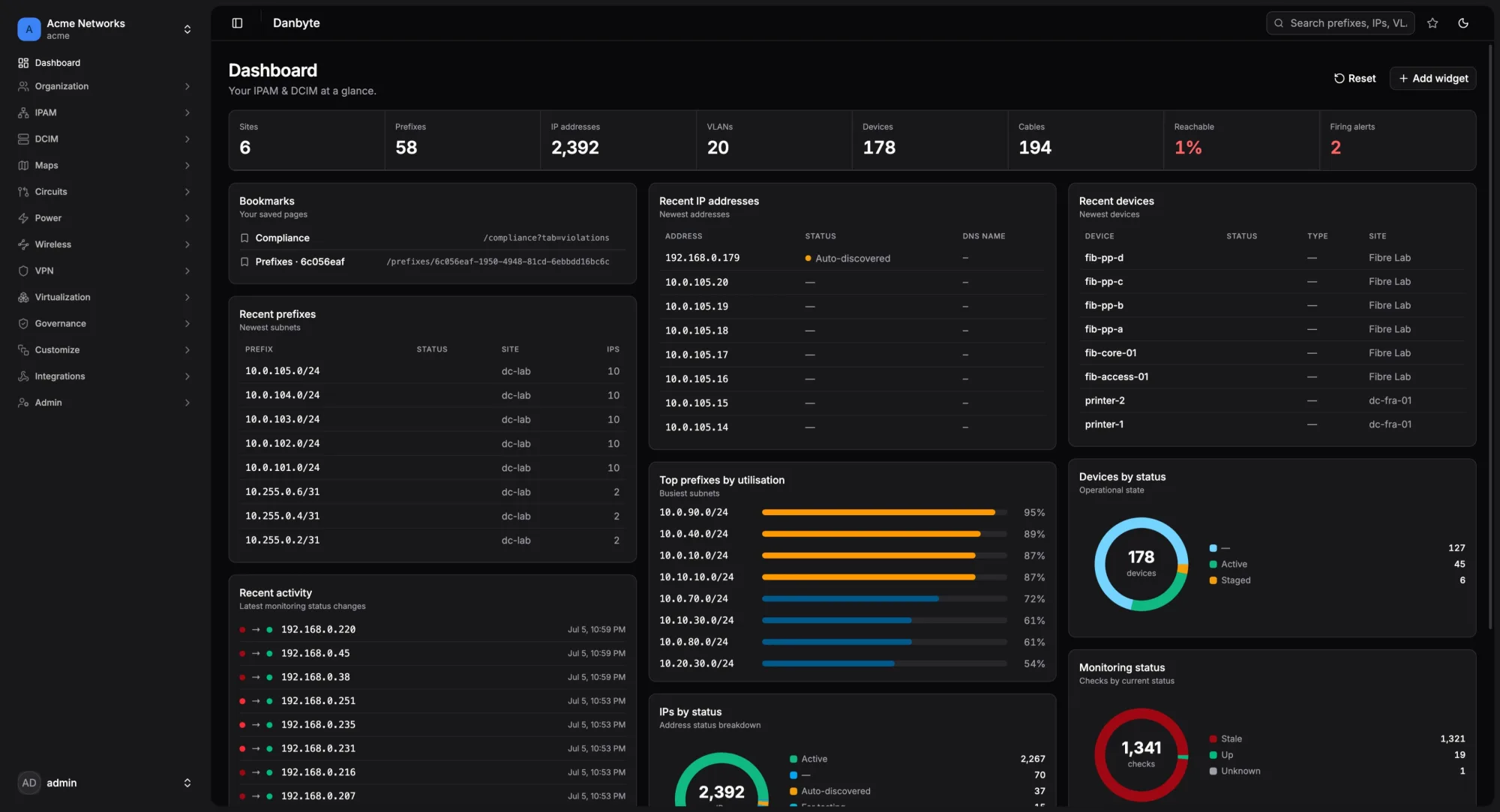
Danbyte tracks your network the way you actually run it: the subnets and addresses (IPAM), the racks, devices, and cabling (DCIM), and everything that ties them together — VLANs, VRFs, circuits, power, floor plans, and live health.
Its one guiding idea is no demo inventory. Danbyte ships the models, not someone else's data — no sample devices, sites, or prefixes to delete before you start. A first run seeds only the minimal operational catalogs the app needs to function (a small set of IP statuses and roles, and the RBAC groups); everything that describes your network — device types, custom statuses and roles, compliance rules, and custom fields — you define yourself, so the system mirrors your network instead of a template.
Spin up a private, throwaway Danbyte in your browser at danbyte.net/demo — a full instance seeded with a real sample network (sites, racks, cabling, IP space, monitoring), yours for 30 minutes. No sign-up, nothing to install.
- IPAM — subnets with automatic utilization, IP addresses, VLANs, VRFs, route targets, and aggregates. Overlap-aware, with per-VRF uniqueness.
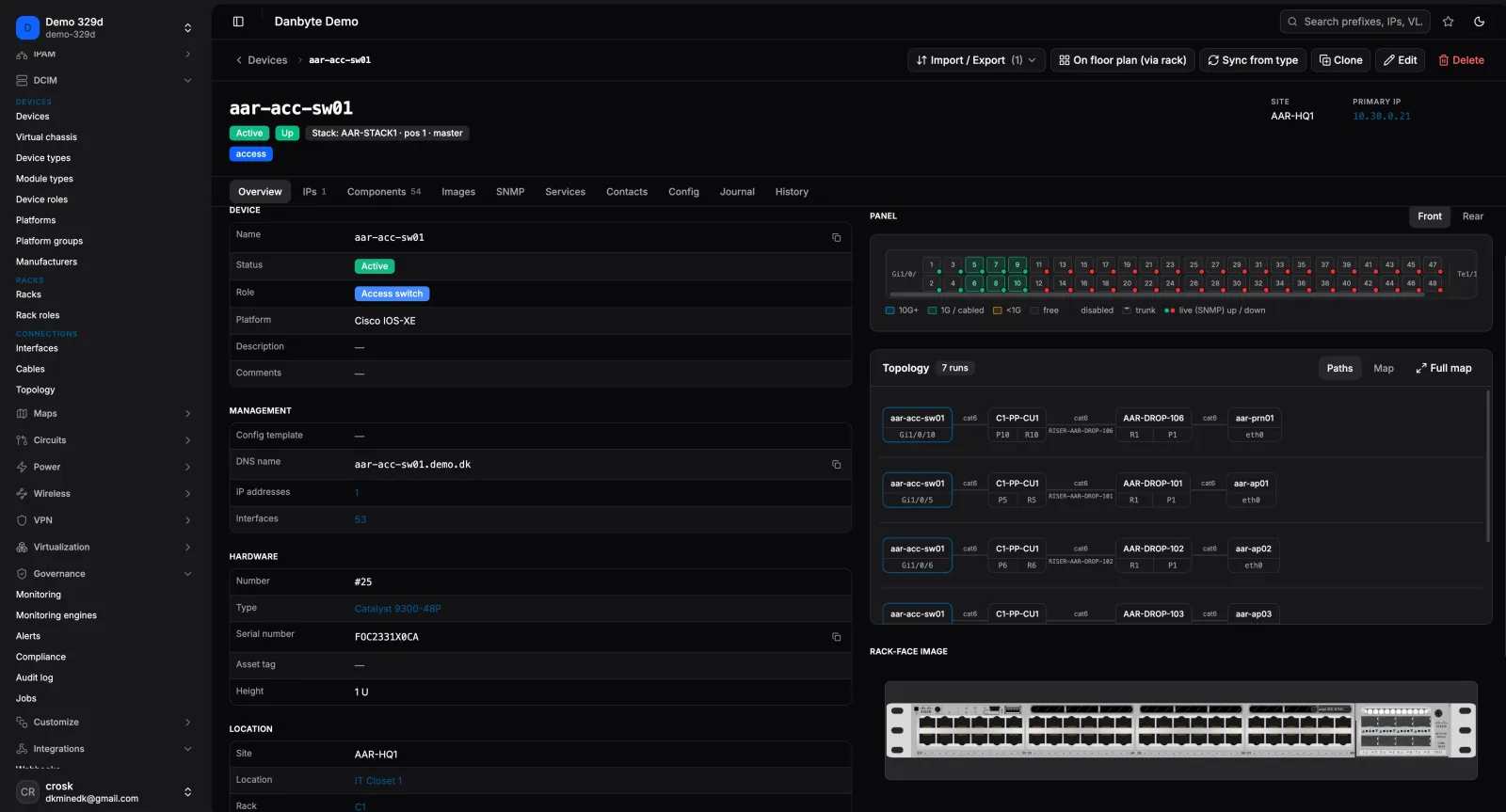
- DCIM — devices, racks with elevations, interfaces, cabling (front/rear ports, patch panels, modules), power panels & feeds.
- Racks in 3D & faceplates — walk racks in 3D and trace a cable from any port; map a device type's ports onto its real front/rear photo so faceplates show live status, speed and drift right on the panel.
- Floor plans & maps — draw a room or site as a grid, drop devices, racks, and cameras (with field-of-view cones) onto it, nest plans inside each other, and zoom out to a geographic map with the circuits and fibre between sites.
- Topology map — an interactive graph of how everything connects.
- Certificates & keys as truth — track TLS certificates and SSH host keys by fingerprint, get drift the moment reality diverges from what you recorded, and issue certs via ACME or a secret store (Vault/OpenBao).
- Monitoring & SNMP drift — multi-protocol health checks with a live status pipeline, plus a read-only observed layer that surfaces SNMP drift you accept on your own terms.
- Lifecycle management — record vendor EoS / EoL dates on hardware types and OS platforms; Danbyte draws a lifetime bar and flags what's aging out, right in the device table.
- Label maker — design QR labels per object type with a live preview, then print at true physical size (roll, A4 / Letter) or export a selection to Excel.
- Compliance & governance — configuration rules, a full change log, per-object journals, attachments on any object, and an audit trail.
- Identity & access — SAML 2.0 SSO alongside local accounts and API tokens, granular role-based permissions, and optional per-site scoping for multi-team setups.
- NetBox import — migrate an existing NetBox instance over its API, with a live-progress UI and a safe dry-run preview (including floor plans from the netbox-map plugin).
- Made yours — tags and custom fields on everything, a customizable dashboard, and models you define instead of a template to delete.
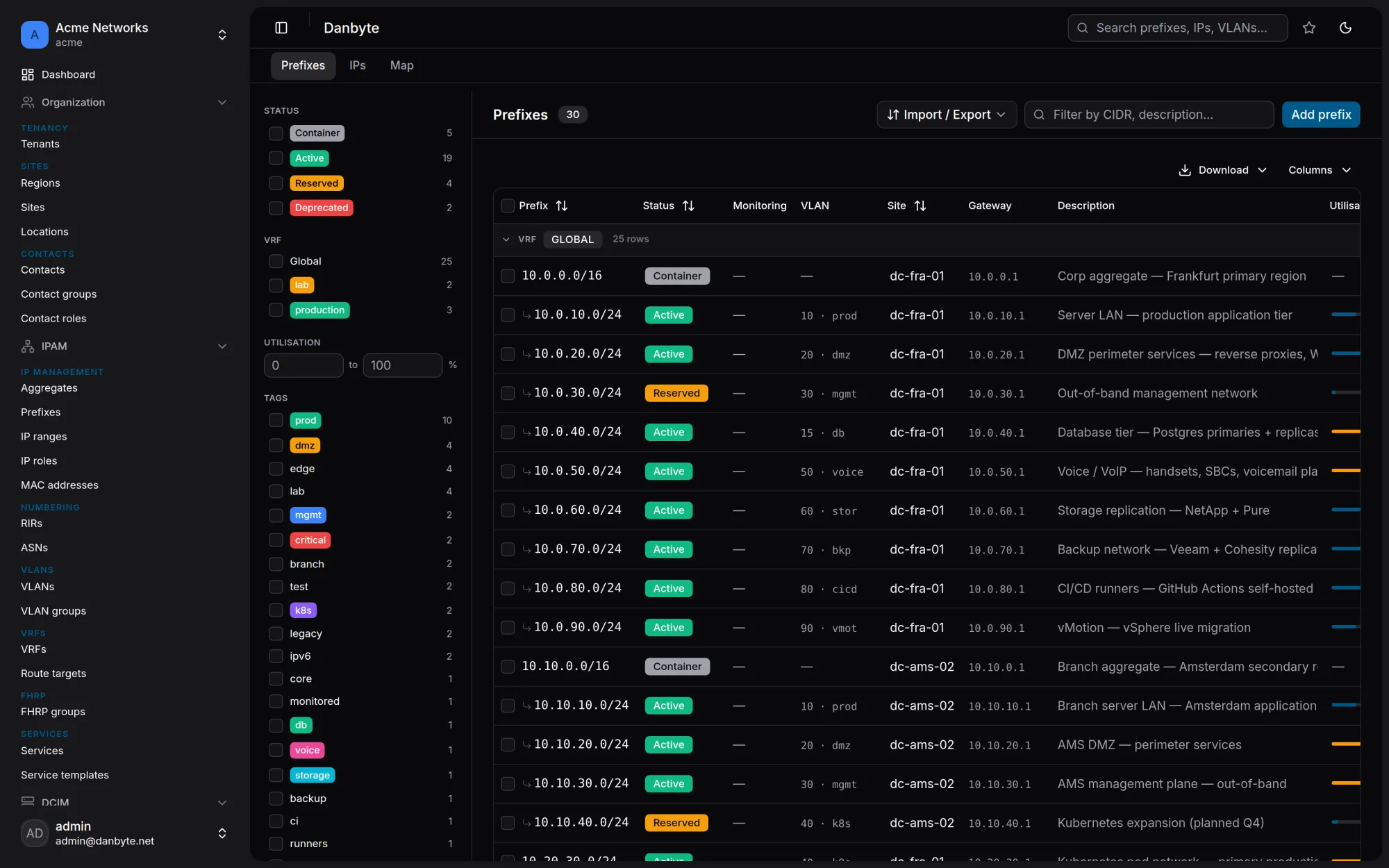 IPAM — prefixes, the derived tree and live utilization |
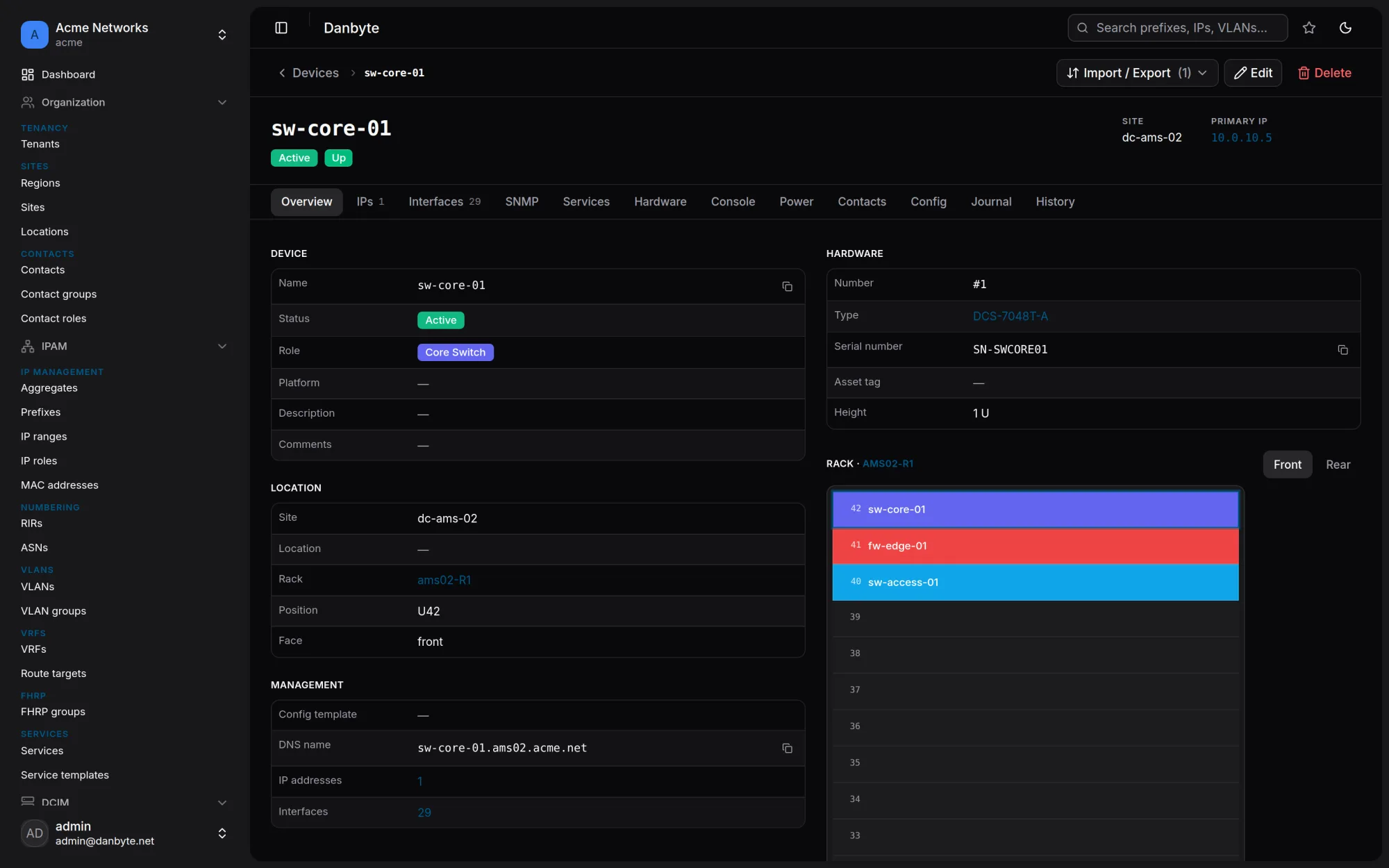 DCIM — a device with interfaces, components and cabling |
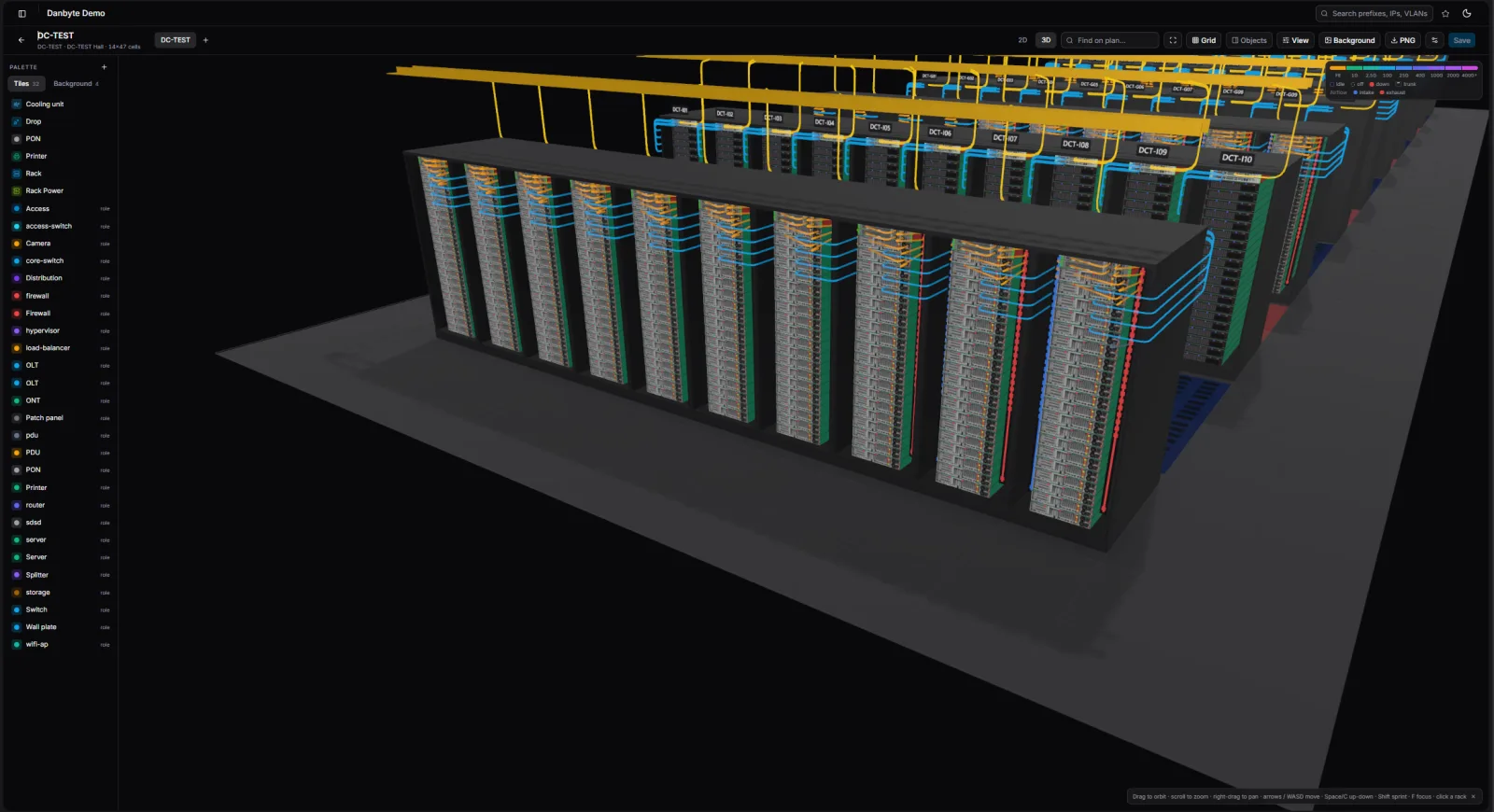 Racks in 3D — walk the hall, trace a cable from any port |
 Faceplates from the real device photo, lit with live status |
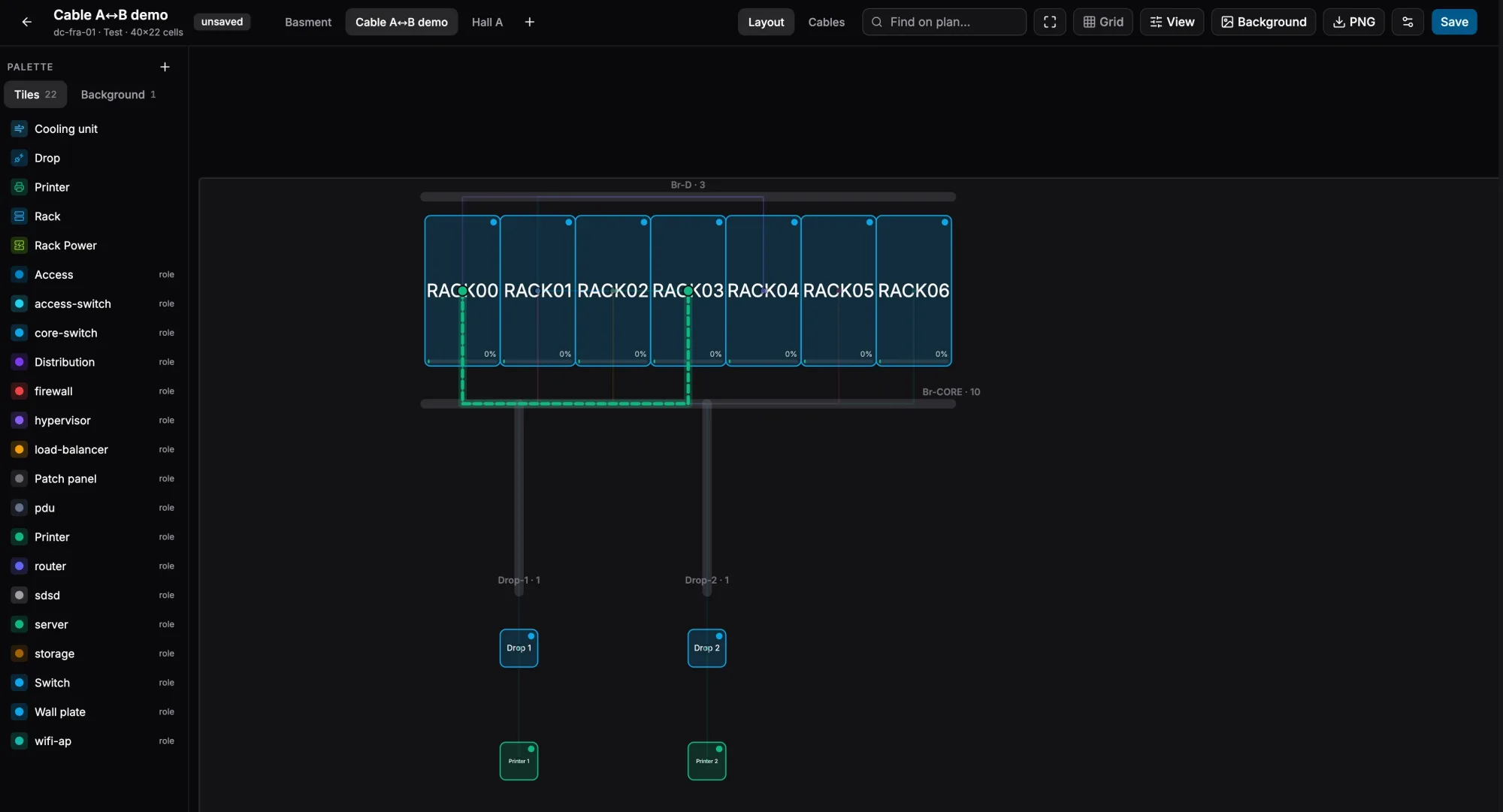 Floor plans — racks, tiles and cameras on a real footprint |
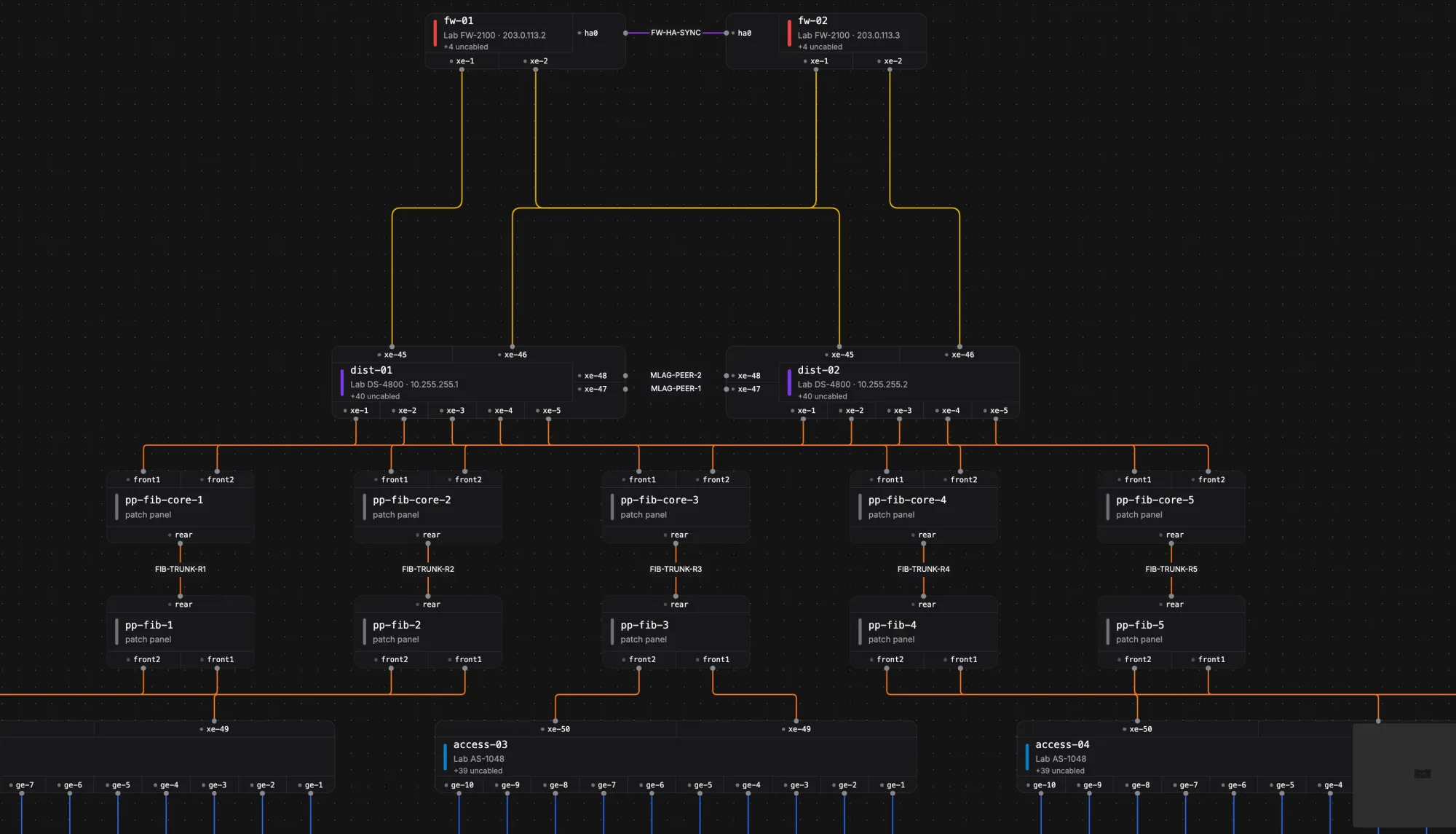 Topology — an interactive graph of how it all connects |
 SNMP drift — observed vs intended, reconciled on your terms |
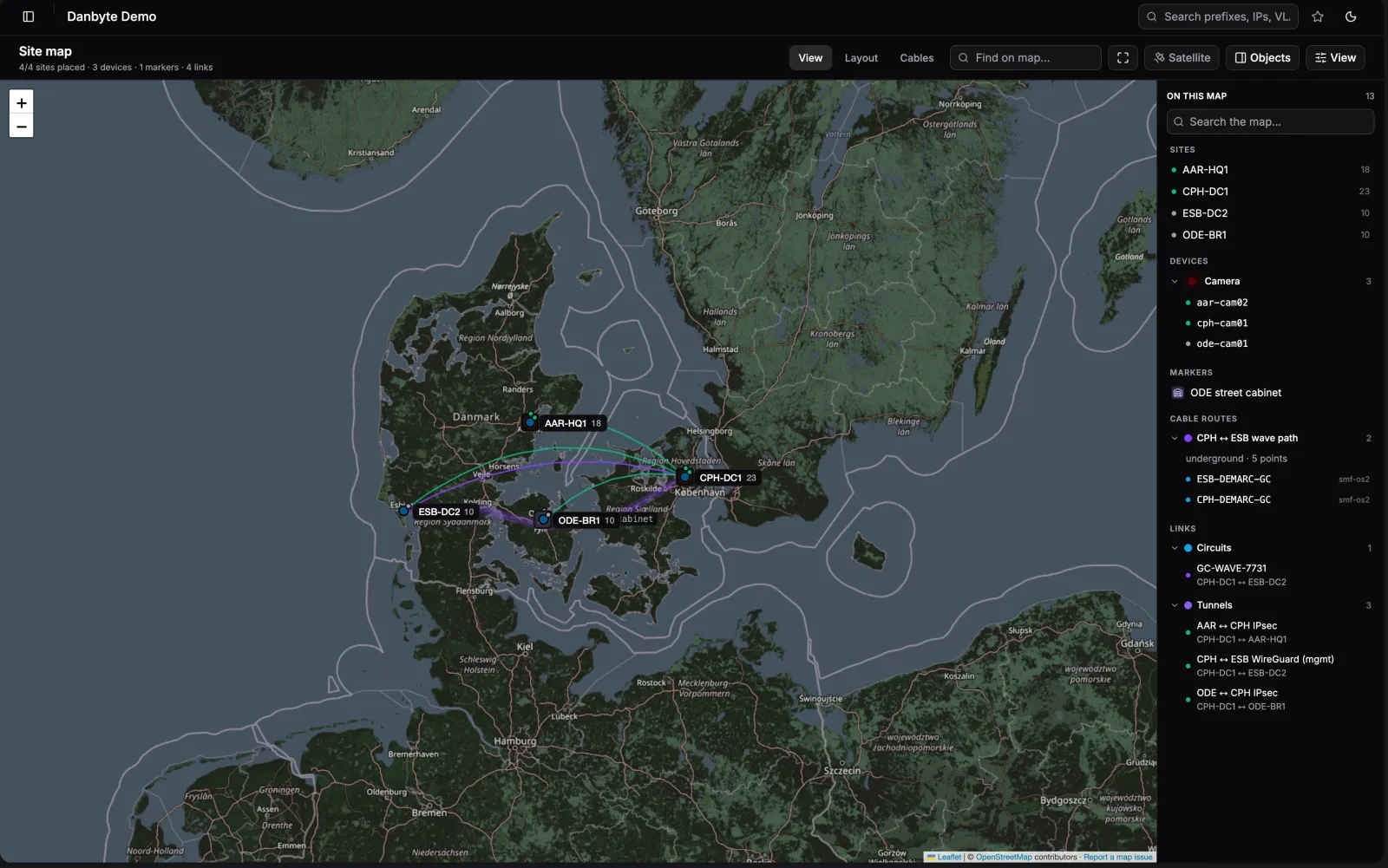 Maps — every site with the circuits and fibre between them |
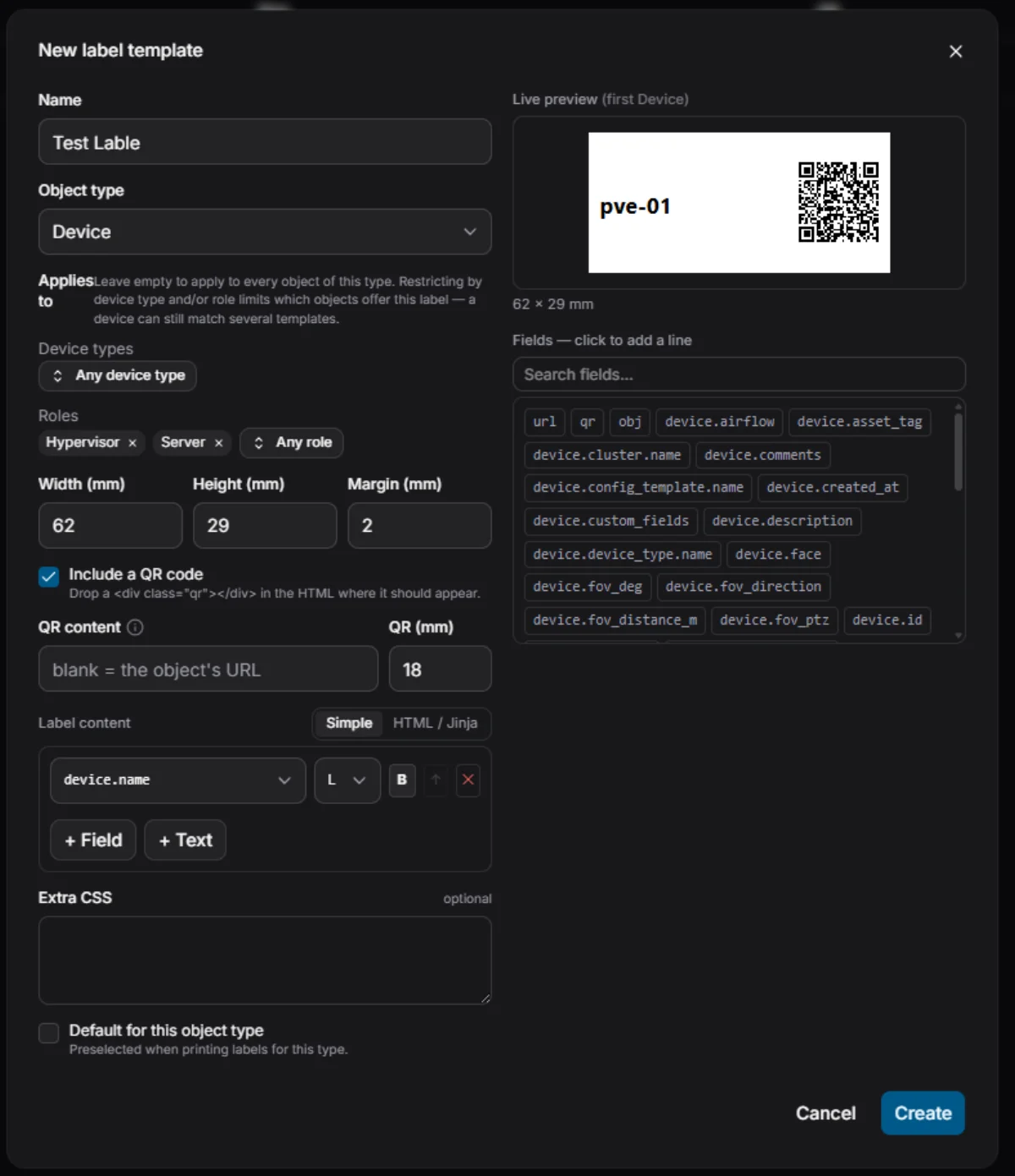 Label maker — QR labels for any object, printed at true size |
…and certificates as a source of truth, SAML SSO, attachments, compliance rules, and a NetBox importer. Try the live demo → |
Every release ships a self-contained bundle — Python, Node, all dependencies, and the prebuilt frontend baked in. On a fresh Ubuntu/Debian box, one line installs everything (service user, database, secrets, nginx + TLS):
curl -fsSL https://danbyte.net/install.sh | bash -s -- --host danbyte.example.comIt resolves the latest release, verifies the bundle's SHA-256, and runs the
installer (flags after -- pass through). Pin a version with
DANBYTE_VERSION=<x.y.z>, or download the bundle manually — see the
installation guide.
It prints the generated admin password when it finishes — open
https://danbyte.example.com/, sign in as admin, and change it under
User → Preferences.
Requirements: Linux, PostgreSQL 15+ (17/18 recommended), and Redis. Everything else is bundled — a fresh box needs nothing else, and the bundle works fully offline.
Prefer containers? A production Docker / Podman compose stack ships too. Building from source or setting up a dev checkout? See the installation guide.
Python 3.13 · Django 5.2 LTS · Django REST Framework · PostgreSQL · Redis + RQ workers · a React / TanStack single-page frontend, served behind nginx and run as rootless systemd services.
The full docs live in docs/ — installation, every
feature, the data model, the API, and the architecture notes. A few good
starting points:
Danbyte is preparing its first public preview. It's already running real infrastructure, but expect some rough edges and moving parts while the public release settles. Feedback and issues are welcome.
Danbyte is licensed under the Apache License, Version 2.0 — see LICENSE and NOTICE. You may use, modify, and distribute it (including commercially) under the terms of that license.